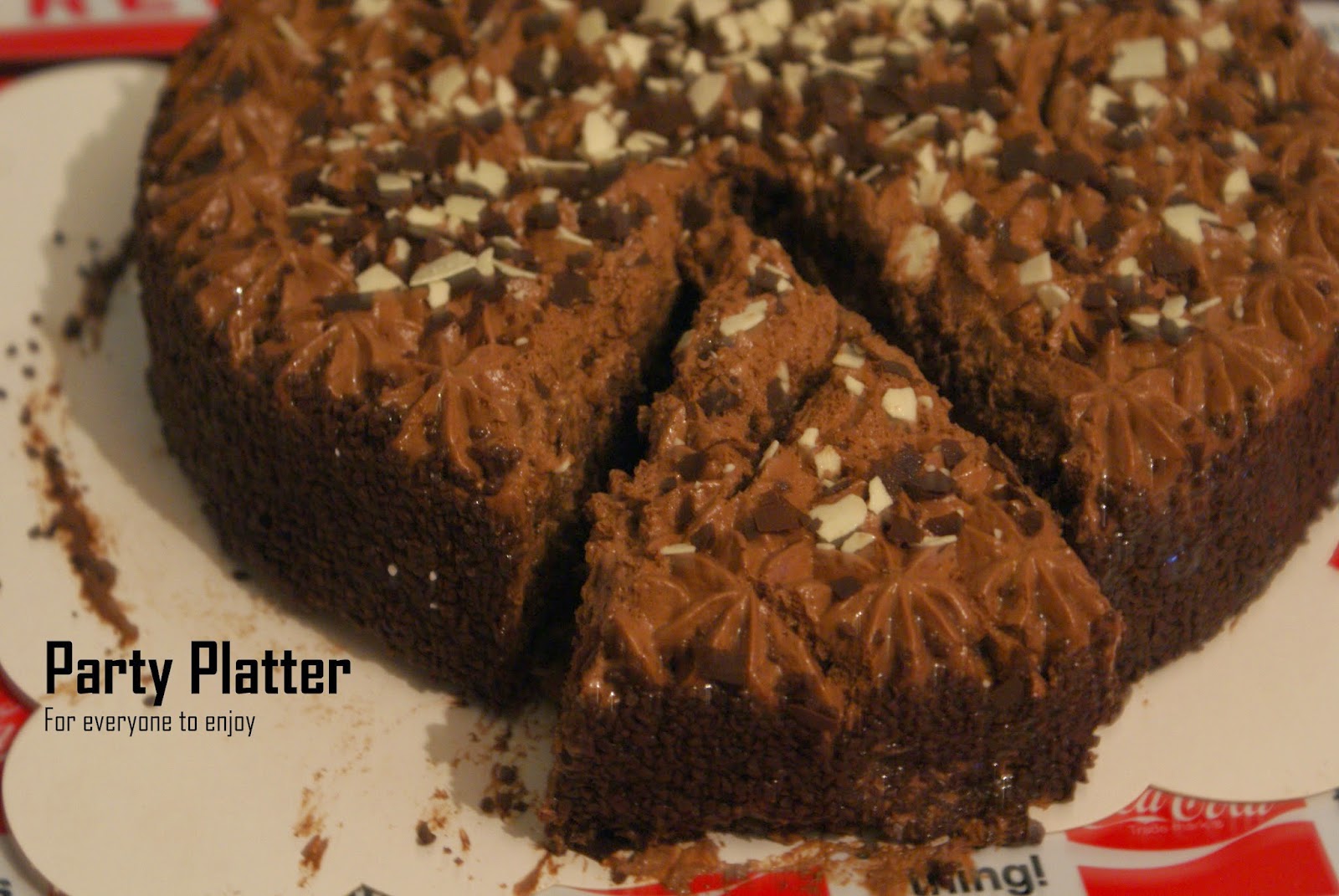
For this project, I chose to do party food as my main subject for my fianl idea for the posters because they worked best with the project for me and I found it easy to photograph this. I think the photos turned out well and how I had hoped and imagined they would. Altough some of the photo's were blury and overexposed because of the setting on my camera.
I liked reasearhing food contemprary and historical photographers because their work was really interesting and inspiring to look at. I especially liked the contempary photographers the best because their work was more realistic for me to have idead from because their ideas were more modern. The photographers that i researched helped me to get ideas and compare my ideas to theirs.
One of the tasks in this project were to experiment with different lighting techniqhes using natural light, lightbox and night time. I think the natural lighting worked best for me because the pictures turned out the best, eventhough I did find the lightbox ones interesting because of how dramatic the lightbox made them look. The nigh time ones didn't turn out well for me because i couldn't get the photo's to show up properly with my camera, i also problems uploading the pictures to the computer because my card reader wasn't working.
Overall for me, this project has ben successful with the research, learning techniques and final pictures. If I had to do this project again I would make sure my pictures were more creative and turn out well.
Showing posts with label unit 8. Show all posts
Showing posts with label unit 8. Show all posts

final poster


Task 1b - metering mode task


These photo was the daylight pictures from the metering mode task and these are the ones in the natural daylight. I did some depth of field with these ones, I only focused on the yellow one and left the rest of them out of focus because the yellow on is the brightest and stands out the most compared to the others.


posters


Task 1a
Histoical Photographers
Irving Penn
Irving Penn, born June 16th 1917 in New Jersey,
best known for his fashion photography, startlingly exposing portraits of
celebrities and still life, trained first as a painter at the Philadelphia
Museum School of Industrial Art. His career includes work for Vogue magazine
and independent advertising for clients. Penn attended the Philadelphia Museum
School of Industrial Art in 1934 until 1938 to study drawing, painting,
graphics, and industrial arts.
He continued to paint and draw throughout his long career as
a photographer, and it is these skills of draughtsmanship and composition that
are most firmly pronounced in his less renowned still lives, in which he
created the most unusual and beautiful configurations of foodstuffs, fashion
and animals.
Even though Penn was
best known for this fashion photography he did some still life of food, bones,
bottles, metal, and found objects; and photographic travel essays. Irving Penn
was one of the first photographers to pose subjects against a simple grey or
white backdrop and he effectively used this simplicity.
Alexander Liebermann had commissioned Penn to shoot
the cover. Yet the result was the work of a consummate master – an elegant
visual vignette of belt, bag, gloves and lemons that fronted the magazine in
1943, and which would be the beginning of collaboration between man and
magazine that lasted over half a century.
 |
|
Irving Penn, Frozen Foods with String
Beans, 1977
|
 |
| Irving Penn, Cholesterol’s Revenge, 1994 |
 |
|
Irving Penn, Ripe Cheese, 1992
|
Edward Weston
Edward Henry Weston was born March 24, 1886, in Highland Park, Illinois. He
spent the majority of his childhood in Chicago where he attended Oakland
Grammar School. He began photographing when he was 16 when he received a camera
from his father. Some of his first photographs were of the parks in Chicago and
his aunt’s farm.
Weston left Chicago in the spring of 1906 and moved near
May's home in Tropico, California (now a neighbourhood in Glendale). He decided
to stay there and pursue a career in photography, but he soon realized he
needed more professional training. A year later he moved to Effingham, Illinois,
in order to enroll in the Illinois School of Photography. They taught a
nine-month course, but Weston finished all of the class work in six months. The
school refused to give him a diploma unless he paid for the full nine months;
Weston refused and instead moved back to California in the spring of 1908.


Henry Fox Talbot
He was born on 11th February 1800 in Dorset,
England.
During November 1838, Henry Talbot finally returned to his photographic
experiments and started drawing up a paper for presentation to the Royal
Society. In a brutal shock just weeks later, word came from Paris in January
1839 that Louis Jacques Mandé Daguerre had frozen the images of the camera
obscura. With no details disclosed, Talbot was placed in the dilemma of the
loss of his discovery if Daguerre's method proved identical to his. In the
gloomy light of an English winter, Talbot could not demonstrate his own
process, but on 25 January Michael Faraday displayed some of Talbot's
still-preserved examples from 1835 at the Royal Institution.
On 31 January, Talbot's "Some Account of the Art of Photogenic Drawing" was read before the Royal Society. This hastily written but wide-ranging paper gave a new name to his process and explored many of its implications. Three weeks later, Talbot detailed his working procedures before the Royal Society.


Jean Cazals, a London based photographer, born in Paris, was awarded "Best Food Photographer of 2012" along with other awards. After a sucessful decade of portraiture for editorial, advertising and desgin clients, he had a stint for 2 years of shooting commercial. Loving food and travel for years brought him naturally to turn to photographing food and lifestyle.
He has shot over 80 books. As an auther and a photographer, Jean was awarded for his book "Teatime", the "Gourmand Best Dessert Cookbook UK 2013" award. He also does consultation and advice fo publishing for new projects.
Jean shoots from his Notting Hill studio when he isn’t travelling overseas for his international clients. His approach is clean, graphic and moody, based on natural light, elegant styling & food presentation. His field of photography covers books but as well as packaging, design, editorial, restaurants website and advertising.
Cazals work has been featured in many well-known magazines, advertisments and books such as; House & Garden, Delicious, Food & Travel, Elle, Marie Claire, Conde Nast Traveler, Vogue Entertaining and Travel, Martha Stewart's Living, Brides, Sunday Times, The Telegraph Mag, Olive Food Arts, M&S mag and more.


Beth Galton
Beth Galton, one of New York's top food and still-life photographers, graduated from Hiram College, with a degree in studio art. Her attention to detail and strong sense of composition has allowed her to acquire a noteworthy client list including; Hellmann’s, Swanson Broth, Campbell’s Soup, Wendy’s, Kraft Foods, Stouffers, Nabisco, St. Ives and Amala skincare. Beth’s photographs have been published in many cookbooks and her work is exhibited periodically. She has received numerous awards from the Communication Arts, Graphic, The Art Director’s Club, One Show and most recently named one of Lürzer’s Int’l Archive’s ‘200 Best Advertising Photographers’ of 2010 & 2011.


The invention of photography is the reason that Henry
Talbot's reputation will always be strongest. In October 1833, he had his
famous intellectual breakthrough. In the company of his sisters and his new
wife on the shores of Italy's Lake Como, he found himself in the frustrating
position of being the only one in the group unable to sketch the scenery.
As he explained in the introduction to the Pencil of
Nature in 1844: "when the eye was removed from the prism – in which
all had looked beautiful – I found that the faithless pencil had only left
traces on the paper melancholy to behold." A decade before, also in Italy,
Talbot had tried to sketch using the common artist's tool, the camera obscura,
but with no better success.
 |
| Pencils of Nature (1846) |
On 31 January, Talbot's "Some Account of the Art of Photogenic Drawing" was read before the Royal Society. This hastily written but wide-ranging paper gave a new name to his process and explored many of its implications. Three weeks later, Talbot detailed his working procedures before the Royal Society.
Contemporary Photographers
Francesco Tonelli
He was born
in Marche, Italy but was raised in Milan (he is now based in New Jersey). He
originally started out as a chef but then took on the career of being a food
photographer. He is a food photographer who also cooks and styles the
majority of the food that he shoots. His main work is advertising food products
which include taking photographs for well-known food products such as Knoss.
Tonelli has had an interview in The Digital Camera magazine about his work in food photography. In
the magazine article, he mentioned that he had done some work with big clients
which include; The New York Times, Coca Cola, Chobani, Swanson, Kraft, Pepsi
Cola, Visa and many more. He also mentioned: “When I was a chef in Italy, I was
working alongside photographers for about a decade – I developed new recipes
for a culinary magazine, then tested and styled them so they could be
photographed and published.”
He decided he wanted to become a food photographer because
he, of course, loves food and he was fascinated by the photographic process,
the reason it took him so long to finally pursue the career of being photographer is because he thought the
cameras seemed too big and complicated and taking photo’s had never crossed his
mind. He was never really interested in photography to begin with and didn’t even
own a camera until 1998 when he went to the USA and bought one of the first
digital cameras for consumers. Another thing he says in the magazine is that photography
was only a hobby to start with then it became a passion. He then began to start
reading about Photoshop and photography, after doing so, he followed a
photographers advice and made his own pin whole camera.
Francesco only realised thing were getting serious when Coca
Cola asked him to do a project with them, he then considered to be a professional.
He says he cooks and prepares all of his food himself, takes pictures of them
and he said he also eats the food after he is done.
Jean Cazals
Jean Cazals, a London based photographer, born in Paris, was awarded "Best Food Photographer of 2012" along with other awards. After a sucessful decade of portraiture for editorial, advertising and desgin clients, he had a stint for 2 years of shooting commercial. Loving food and travel for years brought him naturally to turn to photographing food and lifestyle.
He has shot over 80 books. As an auther and a photographer, Jean was awarded for his book "Teatime", the "Gourmand Best Dessert Cookbook UK 2013" award. He also does consultation and advice fo publishing for new projects.
Jean shoots from his Notting Hill studio when he isn’t travelling overseas for his international clients. His approach is clean, graphic and moody, based on natural light, elegant styling & food presentation. His field of photography covers books but as well as packaging, design, editorial, restaurants website and advertising.
Cazals work has been featured in many well-known magazines, advertisments and books such as; House & Garden, Delicious, Food & Travel, Elle, Marie Claire, Conde Nast Traveler, Vogue Entertaining and Travel, Martha Stewart's Living, Brides, Sunday Times, The Telegraph Mag, Olive Food Arts, M&S mag and more.
Beth Galton
Beth Galton, one of New York's top food and still-life photographers, graduated from Hiram College, with a degree in studio art. Her attention to detail and strong sense of composition has allowed her to acquire a noteworthy client list including; Hellmann’s, Swanson Broth, Campbell’s Soup, Wendy’s, Kraft Foods, Stouffers, Nabisco, St. Ives and Amala skincare. Beth’s photographs have been published in many cookbooks and her work is exhibited periodically. She has received numerous awards from the Communication Arts, Graphic, The Art Director’s Club, One Show and most recently named one of Lürzer’s Int’l Archive’s ‘200 Best Advertising Photographers’ of 2010 & 2011.
In her work, she experiments and plays around with the food
to show more creativity. Some of the work she has done with food is called “Cut
food” because she cut the food in half to show what it looks like inside; from
eggs to popcorn to a thoroughly stuffed turkey, this process is a really interesting
way to photograph food as it’s completely different from anything you would
naturally see. There is a Ted
Talk (a YouTube series) of Nathan Myhrvold talking about the process,
combining food and science to create images like these.
Subscribe to:
Posts (Atom)